The relationship between disasters, socio-economic vulnerability and energy poverty was at the centre of ENPOWER’s contribution to the NEEDS 2026 Conference, under this year’s theme “Societal Resilience in Times of Cascading Crises and Disasters”, held at Kaunas University of Technology. The conference brought together scholars, practitioners and policymakers to examine how societies can better anticipate, withstand and adapt to interconnected and overlapping crises.
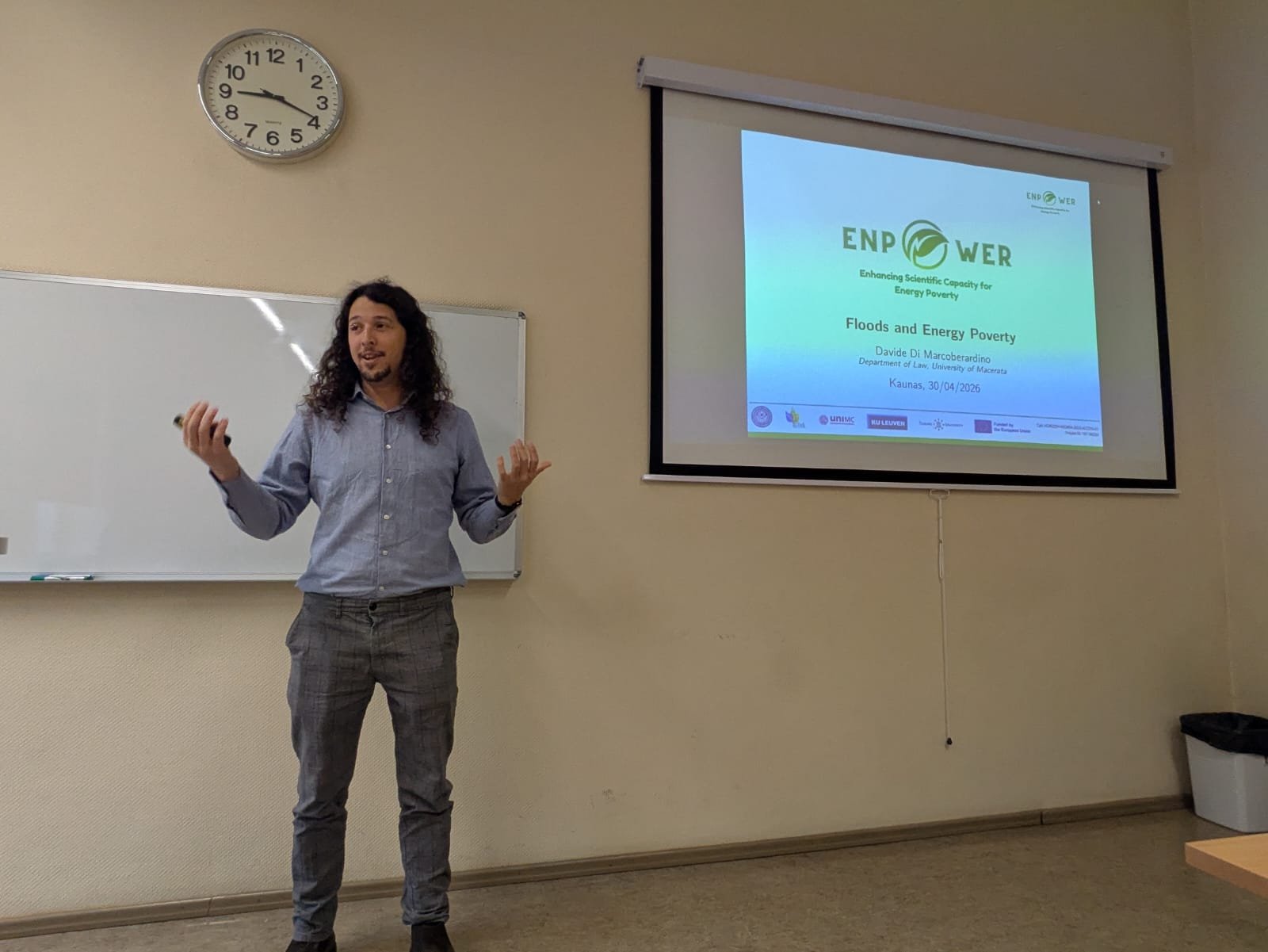
Representing the University of Macerata, Davide Di Marcoberardino presented ENPOWER to an audience including researchers and NGOs, using the project’s work to introduce and clarify the concept of energy poverty and its relevance in the context of disasters.
The presentation underlined a simple but important point, that access to energy is an essential part of everyday life. Households depend on adequate heating, cooling and lighting not only for comfort, but also for maintaining a decent standard of living and protecting health. From this perspective, energy poverty cannot be considered separately from other forms of vulnerability. Floods and other disasters can damage buildings, infrastructure and household resources, making access to essential energy services more difficult. At the same time, households already experiencing socio-economic vulnerability may have fewer resources available to prepare for, respond to and recover from disasters.
The discussion at NEEDS 2026 adds another dimension to ENPOWER’s interdisciplinary approach. The project brings together technical research on energy in buildings and energy efficiency with social sciences, economics, policy and governance in order to better understand and address energy poverty. Through the exchange of knowledge at NEEDS 2026, ENPOWER contributed to a wider discussion on societal resilience while bringing energy poverty into conversations about disaster preparedness, recovery and climate vulnerability.